

WDI Inspection in Clayton, NC
Clayton's warm, humid climate supports year-round pest activity, with termite and carpenter ant pressure particularly acute during spring and summer months. A WDI Inspection identifies hidden wood-destroying insect damage before it becomes costly structural repair, giving homeowners in Clayton clear visibility into pest threats that often go unnoticed until significant damage occurs.
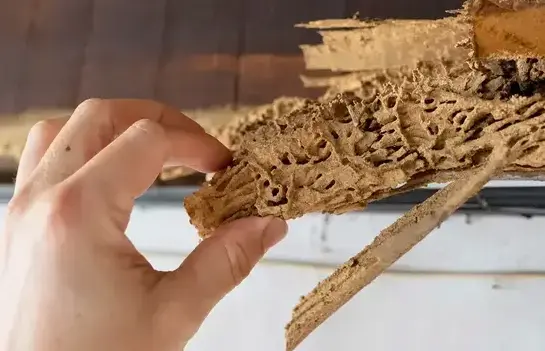
When are termites active in Clayton, NC?
Two things decide when you see a pest: what the species does, and what the weather here actually does. Below is the published guidance on the first, set against this city's own measured climate.
“Native subterranean termites begin swarming in February/March, swarm during the day, and are not attracted to lights.” UGA Extension
“Formosan termites (1) swarm at night; (2) swarm in late May and/or early June (in Georgia), and (3) swarmers are attracted to light.” UGA Extension
“In Pennsylvania, swarms of winged termites usually emerge between February and June.” Penn State Extension
The behavior is the part that travels: a swarm in daylight that ignores a porch light is a native subterranean termite, while a swarm after dark drawn to the light is Formosan. The months do not travel — the same native species begins in February or March in Georgia but can emerge any time from February to June in Pennsylvania, so the dates below matter more than either range.
In Clayton the average last spring freeze falls on April 7, and the frost-free stretch runs to November 3 — about 211 days.Source: NOAA 1991-2020 Climate Normals, CLAYTON WTP, NC US station (0.8 mi from Clayton)

WDI Inspection in Clayton, NC: Protect Your Home
Homeowners in Clayton face a year-round threat from wood-destroying insects, particularly subterranean termites and carpenter ants that thrive in the region's warm, humid climate. These pests work quietly within walls and structural wood, often causing extensive damage before visible signs emerge. Spring through early fall brings peak activity, though termite colonies remain active at reduced levels throughout the year, making regular WDI Inspection essential for catching infestations early and preventing costly structural repairs.
Rigby Pest Control connects Clayton property owners with independent local pest control providers who specialize in thorough WDI Inspection—the focused assessment designed to identify wood-destroying insect activity and damage. The providers in our network conduct detailed inspections of accessible areas, document findings clearly, and explain what they've found so you can make informed decisions about treatment or prevention. Whether you're buying a home, refinancing, or simply protecting your investment, a professional WDI Inspection gives you the clarity you need to act decisively. Reach out today to connect with a local provider ready to schedule your inspection.
Why Clayton Homeowners Choose Rigby for WDI Inspection
WDI Inspection Expertise You Trust
Rigby connects Clayton property owners with local independent providers experienced in thorough WDI inspections. Each provider understands the detailed assessment required to identify wood-damaging insect activity and structural vulnerabilities before they worsen.
Fast Local WDI Inspection Response
When you need a WDI inspection in Clayton, fast scheduling matters. Rigby's network of local providers responds quickly to your request, arranging inspections that fit your timeline without unnecessary delays.
Clear WDI Inspection Reporting
WDI inspections require clarity. The independent providers Rigby connects you with deliver detailed, understandable reports so you know exactly what was found, where, and what it means for your property's next steps.
Year-Round Termite & Ant Vigilance
Clayton's warm seasons bring active termite and carpenter ant pressure, but these wood-damaging pests remain a concern even through winter months. Regular WDI inspections catch early signs before structural damage compounds.
How Our WDI Inspection Works
Schedule Your WDI Inspection Visit
Contact Rigby Pest Control to book a Wood-Destroying Insect inspection appointment with a local provider serving Clayton. Your inspector will arrive ready to assess your property for termite damage, carpenter ant activity, and other wood-destroying pest signs.
Receive Your Detailed WDI Assessment
The inspector performs a thorough examination of accessible wood structures, foundations, and vulnerable areas to identify active or past infestations. In Clayton's climate, where subterranean termites and carpenter ants remain active threats year-round, this inspection pinpoints where these pests are feeding or nesting.
Get Your WDI Inspection Report & Next Steps
You'll receive a comprehensive written report documenting all findings, damage locations, and recommended treatment options. The local provider will explain results and answer questions, helping you decide whether immediate action or monitoring is needed for your specific WDI situation.
Need a wdi inspection in Clayton? Connect with a local inspector fast.
Call (919) 913-7669WDI Inspection Needs Across Clayton
Properties throughout Clayton face distinct wood-destroying insect pressures depending on their age and setting. Established neighborhoods with mature tree canopies and older construction create ideal conditions for subterranean termites and carpenter ants, which exploit wood-to-soil contact and age-related gaps in structures. Newer subdivisions may present different risk profiles based on lot size, drainage patterns, and foundation exposure—factors that a thorough WDI Inspection must account for regardless of neighborhood. In Clayton's humid climate, termite and ant activity remains a year-round concern, with peak pressure from spring through early fall when moisture and warmth accelerate colony activity and wood damage.
A WDI Inspection tailored to Clayton properties evaluates not just visible wood damage, but the environmental and structural conditions that invite wood-destroying insects in the first place. Whether a home sits in a densely treed area like Riverwood or in a more open setting like Starmont, the inspection process identifies moisture accumulation, ground clearance issues, and compromised wood members before they become costly structural problems. Given the persistence of local pest populations, regular WDI Inspections—especially before purchase, refinancing, or major renovation—provide the early detection that protects your investment and prevents hidden infestations from spreading.
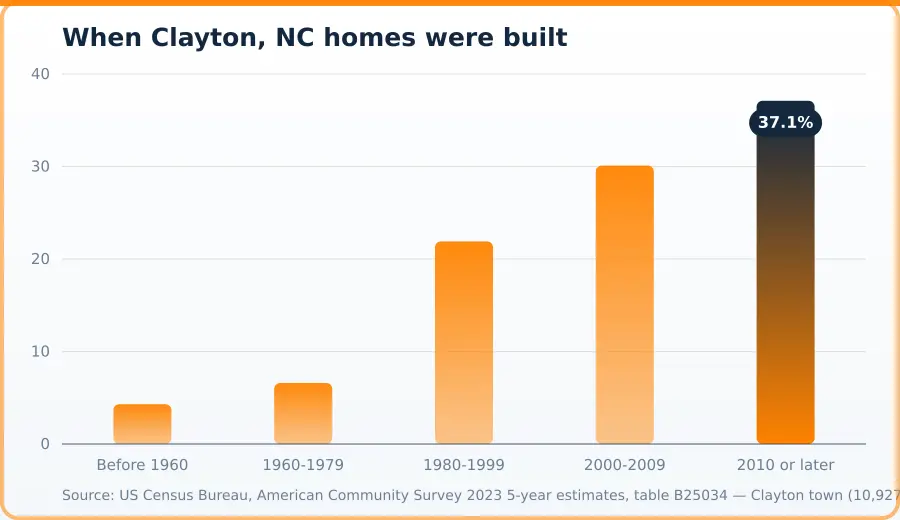
| Period | When homes were built (%) |
|---|---|
| Before 1960 | 4.3 |
| 1960-1979 | 6.6 |
| 1980-1999 | 21.9 |
| 2000-2009 | 30.1 |
| 2010 or later | 37.1 |
Source: US Census Bureau, American Community Survey 2023 5-year estimates, table B25034 — Clayton town (10,927 housing units). Retrieved October 5, 2026.
What Our WDI Inspection Covers
Wood-Destroying Insects
We inspect for termites, carpenter ants, wood-boring beetles, and other wood-destroying organisms.
Accessible Structure
Accessible interior and exterior areas, crawl spaces, and framing are examined for damage and activity.
Conducive Conditions
We note moisture, wood-to-soil contact, and other conditions conducive to WDI infestation.
Official WDI Report
You receive a completed report suitable for real estate transactions and lenders where required.
Related Services
WDI Inspection FAQs — Clayton, NC
A WDI Inspection is a detailed examination of your property for signs of wood-destroying insects—primarily termites, carpenter ants, and related pests common to this region. The inspector from the local provider Rigby connects you with will check foundations, wooden structural elements, attics, crawl spaces, and other vulnerable areas, documenting any active infestations or damage caused by these pests.
Rigby Pest Control works to connect Clayton homeowners with independent local pest control providers promptly. Response times depend on provider availability in your area, but Rigby prioritizes matching you with a nearby professional who can schedule your WDI Inspection as soon as possible to assess your property's condition.
WDI Inspection pricing depends on your property's size, age, construction type, and the thoroughness of the examination. The independent provider you're connected with will discuss these variables with you directly. Factors like accessibility of crawl spaces or attics and the scope of areas to inspect may also influence the final cost.
Clear accessible areas where the inspector needs to look—including around your foundation, attic entry points, and any crawl spaces. Remove stored items from corners and along walls so the provider can examine wooden framing and structural elements thoroughly. Ask your assigned inspector if there are specific preparations they recommend for your Clayton home.
Based on the inspection results, the provider may recommend reducing moisture around your foundation, sealing cracks and gaps where insects enter, and removing dead wood or mulch piled against your home. Regular monitoring and prompt treatment of any new activity help protect your property from recurring termite and carpenter ant problems.
While termite and carpenter ant activity persists year-round in this region, pest pressure typically intensifies from spring through early fall. Scheduling your WDI Inspection before or during warmer months when insects are most active can reveal infestations more readily, though any time of year is appropriate if you suspect a problem.
Homeowner Safety Toolkit
Verify Your Clayton, NC Pest Control Company
Before you hire anyone, use these independent national resources to confirm credentials, standards, and track record.
NPMA
QualityPro is the pest control industry's own accreditation program, endorsed by the National Pest Management Association. Find and verify a company's accreditation before you hire.
Find a Certified ProBBB
Look up any pest control company's complaint history, customer reviews, and accreditation status — a free, independent check before you hire.
Check StandingEPA
The federal government's own guide to choosing a pest control method and using pesticides safely around your home and family.
Pesticide Safety GuideBuying or protecting a property in Clayton? Schedule your wdi inspection today.
Call (919) 913-7669Areas We Serve in Clayton, North Carolina
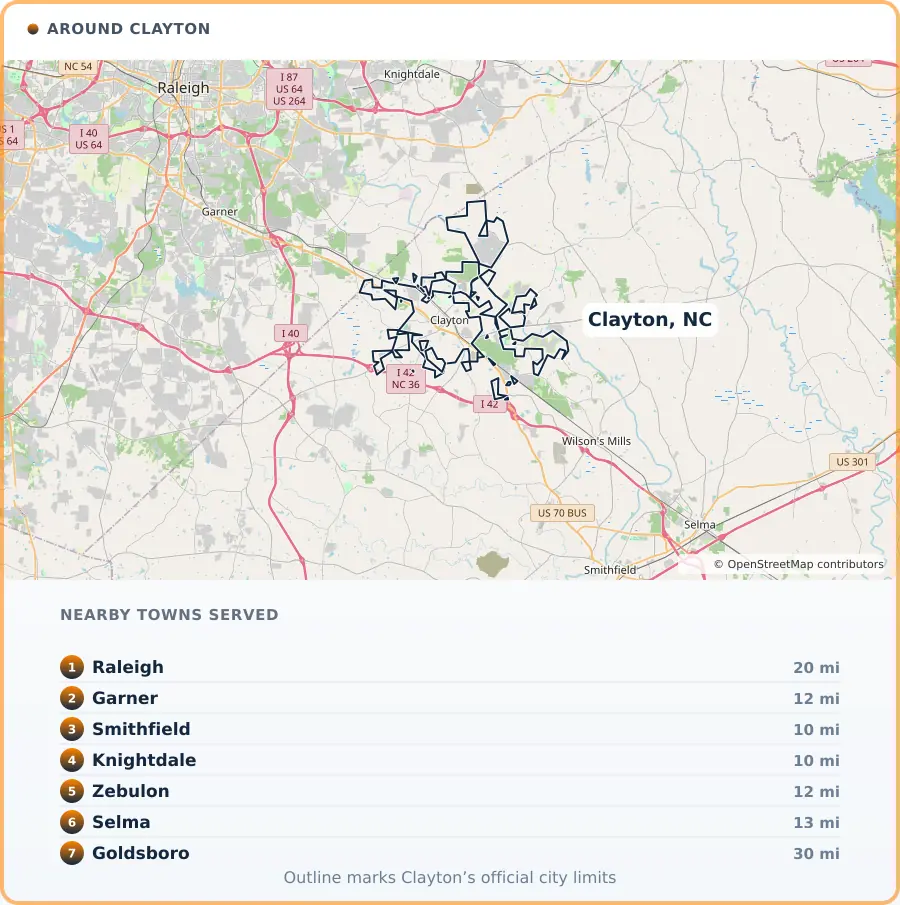
Coverage centres on Clayton, NC and reaches 7 surrounding communities. Response time is what matters most in the hours after a problem is found, so knowing the ground is part of the job.
Clayton, NC Information
Just outside Raleigh, Clayton, NC has grown from a quiet crossroads town into one of the fastest-changing communities in the Triangle, with roughly 28,000 residents calling it home. That growth shows in neighborhoods like Flowers Plantation and Downtown Clayton, where new rooftops and small businesses keep springing up alongside longtime fixtures.
The local economy runs on a sturdy mix of industries: pharmaceutical and biomanufacturing giants like Novo Nordisk and Grifols, heavy equipment maker Caterpillar, and steady employment from UNC Health Johnston, Johnston County Public Schools, and area retailers. Add in agriculture roots that still shape the surrounding countryside, and you get a town that feels both rooted in its rural past and firmly plugged into the region's modern momentum.

Photo: Chris Light, CC BY-SA 4.0