

Termite Treatment in Clayton, NC
Subterranean termites remain a year-round concern in Clayton's Piedmont environment, with activity intensifying during the warmer months when colonies expand and seek new wood sources. Early detection and treatment are critical to prevent costly structural damage, making prompt professional intervention essential once signs of infestation appear. Rigby Pest Control connects Clayton property owners with local termite treatment providers who can assess your home and recommend the right solution for your situation.
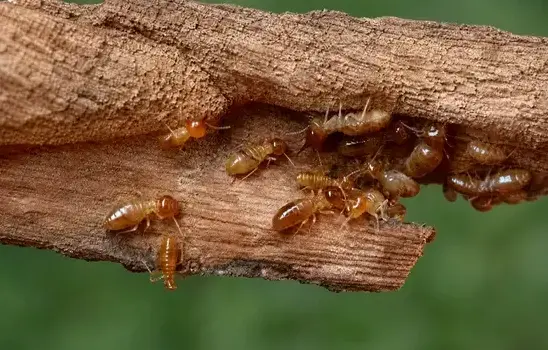
When do termites swarm in Clayton, NC?
Two things decide when you see a pest: what the species does, and what the weather here actually does. Below is the published guidance on the first, set against this city's own measured climate.
“Native subterranean termites begin swarming in February/March, swarm during the day, and are not attracted to lights.” UGA Extension
“Formosan termites (1) swarm at night; (2) swarm in late May and/or early June (in Georgia), and (3) swarmers are attracted to light.” UGA Extension
“In Pennsylvania, swarms of winged termites usually emerge between February and June.” Penn State Extension
The behavior is the part that travels: a swarm in daylight that ignores a porch light is a native subterranean termite, while a swarm after dark drawn to the light is Formosan. The months do not travel — the same native species begins in February or March in Georgia but can emerge any time from February to June in Pennsylvania, so the dates below matter more than either range.
In Clayton the average last spring freeze falls on April 7, and the frost-free stretch runs to November 3 — about 211 days.Source: NOAA 1991-2020 Climate Normals, CLAYTON WTP, NC US station (0.8 mi from Clayton)

Termite Treatment Solutions for Clayton Homeowners
Clayton sits in North Carolina's humid Piedmont region, where subterranean termites present a year-round concern for property owners. These wood-destroying insects thrive in the moisture-rich environment typical of spring through early fall, but remain active at reduced levels even during cooler months. A termite infestation can go undetected for months or years, silently compromising structural integrity and creating costly damage. Homeowners in areas like Riverwood and Downtown Clayton often discover termite activity only after visible signs emerge—mud tubes along foundations, hollow-sounding wood, or visible swarmers. Early detection and prompt termite treatment are essential to halt active colonies and prevent further deterioration of your property.
Rigby Pest Control connects Clayton property owners with independent local pest control providers who specialize in comprehensive termite treatment. These providers conduct thorough inspections to identify infestation scope and entry points, then develop a targeted treatment strategy suited to your home's specific situation. Follow-up monitoring and preventive measures are built into their approach to reduce the likelihood of reinfestation. Rather than hoping a termite problem resolves on its own, working with a local provider through Rigby ensures you receive prompt, professional attention and ongoing support to protect your investment.
Why Clayton Homeowners Choose Rigby for Termite Treatment
Fast Local Termite Treatment
Rigby connects you with independent termite treatment providers in Clayton who respond quickly to active infestations. Speed matters when termites are actively damaging your home's structure.
Clear Termite Treatment Communication
Local providers explain termite treatment options, timelines, and what to expect before work begins. You'll understand the full scope of the termite problem and the plan to address it.
Thorough Termite Treatment Inspections
Rigby's network includes providers trained to identify termite activity in hidden areas—walls, foundations, and wood framing. Comprehensive inspections catch infestations early before extensive damage occurs.
Year-Round Termite Protection Matters Here
Clayton's climate supports termite and carpenter ant activity throughout the year, though pressure peaks spring through early fall. Local termite treatment providers understand these seasonal cycles and help protect your property year-round.
How Our Termite Treatment Works
Schedule Your Termite Treatment Visit
Contact Rigby Pest Control to describe signs of termite activity at your Clayton property. We'll connect you with a local independent pest control provider who can schedule a termite inspection at a time that works for you.
Get a Termite Inspection and Diagnosis
The provider will inspect your property for termite damage, entry points, and conducive conditions. Given that subterranean termites remain active year-round in the Piedmont region, a thorough assessment determines the scope of termite treatment needed and the best approach for your home.
Begin Termite Treatment and Monitoring
Once the termite treatment plan is approved, the provider will apply the recommended termite control methods and discuss follow-up inspections. Ongoing monitoring helps catch any new termite activity early and protects your property long-term.
Ready to get rid of termites in Clayton? A local provider can get started fast.
Call (919) 913-7669Termite Treatment Across Clayton's Neighborhoods
Clayton's humid Piedmont setting creates conditions where subterranean termites remain active threats throughout the year, with particularly aggressive colony behavior during warmer months. Homes in established neighborhoods like Riverwood and Starmont—where mature trees and older construction are common—often face elevated risk because termites find multiple entry points in aging wood structures and readily travel through root systems near foundations. Newer subdivisions present different challenges; while construction standards are more current, termite colonies in the surrounding soil can still target freshly built homes, especially if landscaping includes mulch or wood debris close to the structure.
Effective termite treatment in Clayton requires understanding these local conditions. Whether your property is in a long-settled area or a newer development, a local pest control provider can assess foundation exposure, soil composition, and seasonal pest pressure specific to your location. Early detection and timely treatment are critical—delaying action allows colonies to expand and cause costly structural damage. Rigby Pest Control connects you with independent local providers who understand how Clayton's climate and neighborhood characteristics influence termite risk and can recommend appropriate treatment strategies for your property.
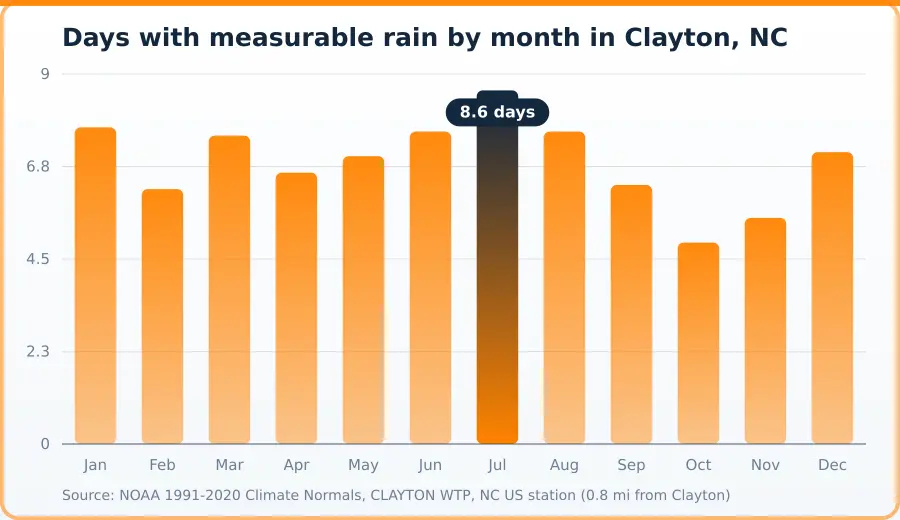
| Period | Days with measurable rain by month (days) |
|---|---|
| Jan | 7.7 |
| Feb | 6.2 |
| Mar | 7.5 |
| Apr | 6.6 |
| May | 7 |
| Jun | 7.6 |
| Jul | 8.6 |
| Aug | 7.6 |
| Sep | 6.3 |
| Oct | 4.9 |
| Nov | 5.5 |
| Dec | 7.1 |
Source: NOAA 1991-2020 Climate Normals, CLAYTON WTP, NC US station (0.8 mi from Clayton). Retrieved October 5, 2026.
Seasonal Termite Treatment Needs in Clayton, NC
Spring: Emergence and Activity
As temperatures warm after Clayton's last spring freeze around April 7th, subterranean termites become increasingly active and begin their spring swarming season. Homeowners often spot winged termites or mud tubes for the first time, signaling an established colony. Rigby connects you with local termite treatment providers who can inspect for hidden damage and recommend preventive or active treatment before populations peak.
Summer: Peak Pressure
Summer heat and Clayton's frequent rain—averaging 8.6 days with measurable precipitation in July—create ideal conditions for termite foraging and colony growth. Moisture-rich soil makes wood more attractive to subterranean termites, and damage can accelerate. Rigby's local provider network responds quickly to summer infestations, offering inspection and treatment plans tailored to your property's specific vulnerability.
Fall: Pre-Winter Treatment Window
Before Clayton's first autumn freeze around November 3rd, termite activity remains significant while weather still permits thorough treatment applications. Fall is an ideal time to address summer infestations before termites retreat deeper into soil or wood to overwinter, while fire ants also remain active. Working with a local provider through Rigby ensures treatment is completed before the ground hardens and access becomes difficult.
Winter: Dormancy and Monitoring
Winter freezing nights—averaging 17.4 in December—slow but do not stop termite activity entirely. Colonies remain alive in protected soil zones, and wood-to-ground contact provides shelter and warmth. This quieter season is valuable for scheduling post-treatment inspections and planning spring preventive measures. Rigby connects you with providers who can monitor treated areas and discuss long-term termite management strategies for your Clayton home.
Related Services
Termite Treatment FAQs — Clayton, NC
Termite Treatment usually begins with a thorough inspection to identify active infestations and entry points. The independent provider you're connected with will assess the extent of damage and recommend a treatment plan—often involving targeted applications around your foundation, soil barriers, or internal wood elements. You'll receive a clear explanation of the approach and what to expect during and after service.
Rigby Pest Control connects you with independent local providers in Clayton who understand the urgency of termite issues. Response times vary by provider availability, but many can assess your situation and begin treatment within days of your initial contact. When you submit your request, you'll be matched with nearby providers ready to help.
Termite Treatment pricing depends on several factors: the size of your property, the severity of the infestation, the type of treatment needed, and whether preventive barriers are recommended. Independent providers price their services individually based on your specific situation. When you connect through Rigby, you'll receive details so you can compare options and make an informed decision.
Your provider will give you specific pre-treatment instructions, which may include clearing debris from around your foundation, ensuring access to affected areas, and temporarily relocating pets if needed. Most preparations are straightforward. The independent provider handling your treatment will walk you through any necessary steps to ensure the process goes smoothly and safely.
After treatment, reduce conditions that attract termites by maintaining proper drainage around your foundation, removing wood debris and mulch piled against your home, and sealing cracks and gaps. Many providers recommend ongoing monitoring or preventive barrier treatments. Discuss long-term strategies with the independent provider you're connected with to protect your property year-round.
Subterranean termites remain active throughout the year in this region, though their activity intensifies during warmer months when conditions are most favorable for their spread. Spring through early fall typically sees peak termite pressure in Clayton. Early detection and prompt treatment—whether during active season or off-season—prevents colonies from causing serious structural damage to your home.
Homeowner Safety Toolkit
Verify Your Clayton, NC Pest Control Company
Before you hire anyone, use these independent national resources to confirm credentials, standards, and track record.
NPMA
QualityPro is the pest control industry's own accreditation program, endorsed by the National Pest Management Association. Find and verify a company's accreditation before you hire.
Find a Certified ProBBB
Look up any pest control company's complaint history, customer reviews, and accreditation status — a free, independent check before you hire.
Check StandingEPA
The federal government's own guide to choosing a pest control method and using pesticides safely around your home and family.
Pesticide Safety GuideDealing with termites in Clayton? Get fast, targeted treatment from a local provider.
Call (919) 913-7669Areas We Serve in Clayton, North Carolina
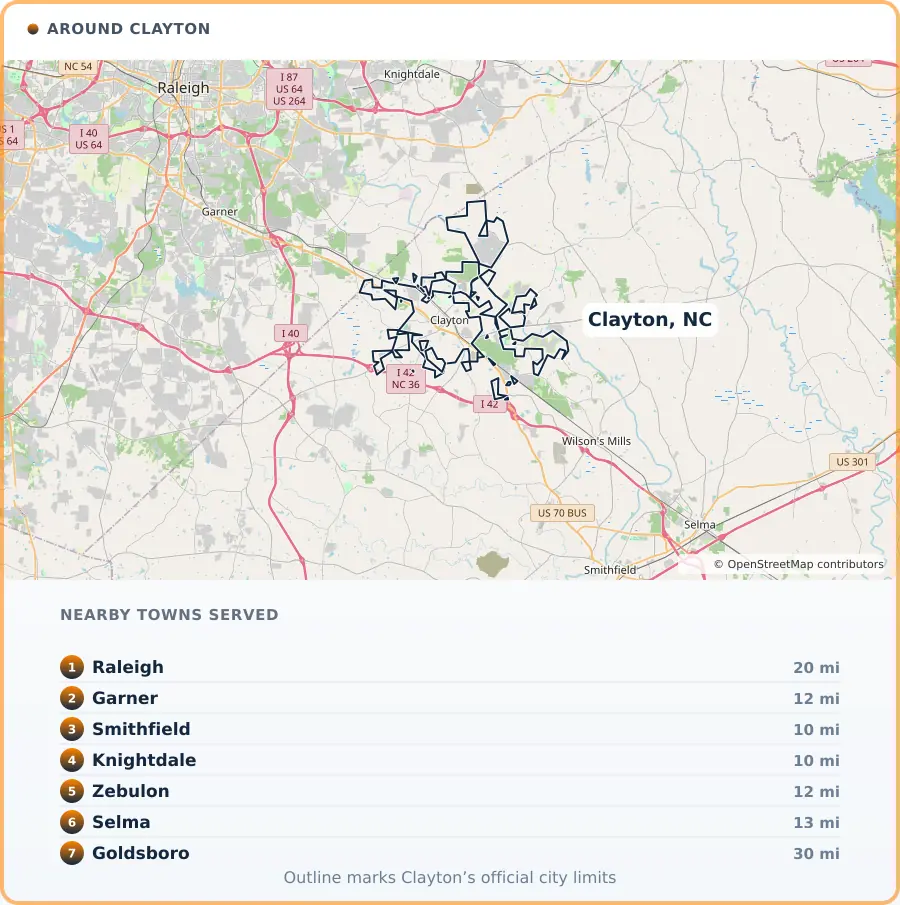
Coverage centres on Clayton, NC and reaches 7 surrounding communities. Response time is what matters most in the hours after a problem is found, so knowing the ground is part of the job.
Clayton, NC Information
Just outside Raleigh, Clayton, NC has grown from a quiet crossroads town into one of the fastest-changing communities in the Triangle, with roughly 28,000 residents calling it home. That growth shows in neighborhoods like Flowers Plantation and Downtown Clayton, where new rooftops and small businesses keep springing up alongside longtime fixtures.
The local economy runs on a sturdy mix of industries: pharmaceutical and biomanufacturing giants like Novo Nordisk and Grifols, heavy equipment maker Caterpillar, and steady employment from UNC Health Johnston, Johnston County Public Schools, and area retailers. Add in agriculture roots that still shape the surrounding countryside, and you get a town that feels both rooted in its rural past and firmly plugged into the region's modern momentum.

Photo: Chris Light, CC BY-SA 4.0