

Centipede Control in Clayton, NC
Clayton's warm, humid springs and summers create ideal conditions for centipede activity, particularly as soil moisture rises and prey insects become abundant. Local homeowners often discover these fast-moving arthropods in basements, crawl spaces, and damp foundation areas where they hunt for food, making prompt identification and removal important to restore peace of mind. Rigby Pest Control connects Clayton residents with independent local pest control providers who can assess centipede activity on your property and discuss removal options tailored to your home's layout and needs.


Centipede Control Solutions for Clayton Homeowners
Centipedes thrive in Clayton's humid Piedmont environment, where moisture and mild temperatures create ideal conditions for these multi-legged pests to establish themselves in and around homes. While centipedes are often considered beneficial predators outdoors, they become a genuine concern when they invade living spaces, basements, and crawl areas—particularly during spring and fall transitions when they seek shelter and prey. Homeowners throughout Clayton, from established neighborhoods like Starmont to areas around Downtown Clayton, frequently encounter centipede activity that disrupts peace of mind and raises questions about home safety and structural vulnerability.
Rigby Pest Control connects Clayton property owners with independent local pest control providers who understand centipede behavior and can address infestations with targeted, thorough solutions. Rather than offering one-time treatments that leave room for reinfestation, the providers in our network develop comprehensive centipede control plans tailored to your home's specific entry points, moisture levels, and activity patterns. They focus on reducing the conditions that attract centipedes while implementing strategic barriers and follow-up monitoring to keep populations under control. When you reach out through Rigby, you're matched with a responsive local provider ready to assess your situation and move forward with the centipede control your Clayton home needs.
Why Clayton Homeowners Choose Rigby for Centipede Control
Fast Local Centipede Control
Rigby connects you with independent centipede control providers in Clayton who respond quickly to active infestations. Local expertise means faster arrival and faster relief from unwanted centipedes in your home.
Clear Centipede Treatment Plans
The local providers Rigby connects you to explain centipede control strategies upfront—what they'll address, how they'll do it, and what to expect. No surprises, just straightforward communication about your centipede problem.
Thorough Centipede Inspection
Centipede control starts with finding where they're entering and hiding. Rigby's network providers conduct detailed inspections to locate entry points and conditions that attract centipedes, then address them systematically.
Centipede Control During Peak Season
Clayton's warm, humid growing season brings increased centipede activity from spring into early fall. Rigby connects you with local providers who understand when centipede pressure peaks and help protect your property when it matters most.
How Our Centipede Treatment Works
Schedule Your Centipede Control Visit
Contact Rigby Pest Control to describe centipede activity in your Clayton home. A local provider will confirm availability and arrange a time to inspect your property for centipede entry points and harborage areas.
Assessment & Centipede Treatment Plan
The local provider visits to identify where centipedes are entering and nesting, then recommends targeted centipede control methods suited to your home's layout. Clayton's humid climate creates favorable conditions for centipedes, making early intervention important.
Centipede Control & Follow-Up Care
The provider applies centipede control treatments to entry points and affected areas, then advises on reducing moisture and clutter that attract centipedes. Follow-up visits may be scheduled to monitor progress and address any recurring activity.
Ready to get rid of centipedes in Clayton? A local provider can get started fast.
Call (919) 913-7669Centipede Control Across Clayton Neighborhoods
Clayton's humid Piedmont environment creates conditions where centipedes thrive year-round, with activity intensifying during warmer months when moisture levels peak. Established neighborhoods like Riverwood and Downtown Clayton, characterized by mature landscaping and older structures, often provide centipedes with abundant harborage in leaf litter, mulch beds, and foundation gaps. These areas' tree canopy and organic debris create ideal microclimates for the arthropods centipedes hunt, drawing them closer to homes in search of prey.
Newer subdivisions and developing areas may experience different patterns depending on landscaping maturity and moisture management. Regardless of neighborhood type, spring through early fall represents peak centipede activity, though cooler months don't eliminate the problem entirely. Local pest pressure from ants, termites, and other arthropods means centipedes have reliable food sources, prolonging their presence on properties. Effective centipede control in Clayton requires understanding these seasonal and environmental factors. Rigby Pest Control connects Clayton property owners with local independent providers who understand the region's specific conditions and can tailor centipede management to your property's characteristics and location.
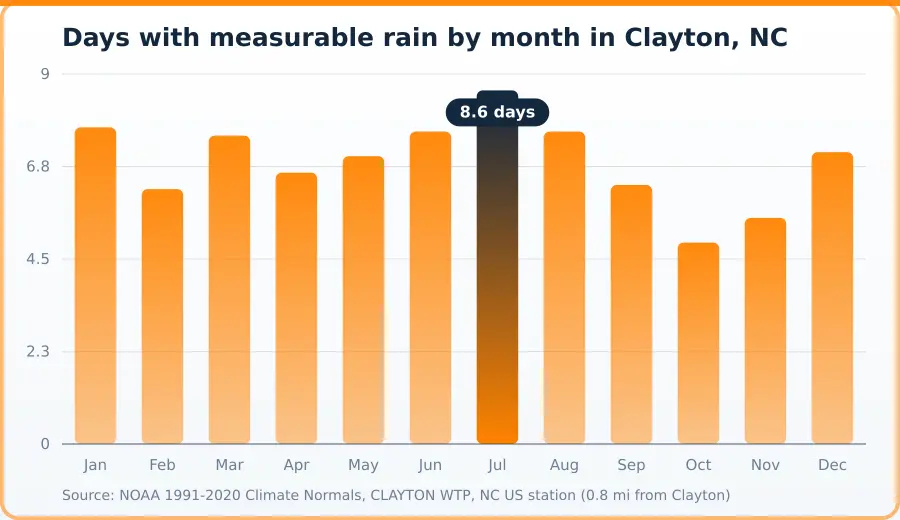
| Period | Days with measurable rain by month (days) |
|---|---|
| Jan | 7.7 |
| Feb | 6.2 |
| Mar | 7.5 |
| Apr | 6.6 |
| May | 7 |
| Jun | 7.6 |
| Jul | 8.6 |
| Aug | 7.6 |
| Sep | 6.3 |
| Oct | 4.9 |
| Nov | 5.5 |
| Dec | 7.1 |
Source: NOAA 1991-2020 Climate Normals, CLAYTON WTP, NC US station (0.8 mi from Clayton). Retrieved October 5, 2026.
Seasonal Centipede Control Needs in Clayton, NC
Spring Emergence
As Clayton's soil warms after the last freeze around April 7, centipedes emerge from winter dormancy and become highly active hunters in yards, gardens, and home perimeters. Spring's frequent rain—averaging 7.5 days with measurable precipitation in March—creates the moist conditions centipedes favor. Rigby Pest Control connects you with local providers who identify entry points and implement control strategies before populations peak in warmer months.
Summer Peak Activity
Clayton summer heat—with an average of 14.9 days at or above 90°F in July alone—drives centipedes deeper into soil and mulch while they hunt aggressively at night around foundations and porches. High humidity and frequent summer rain (averaging 8.6 rain days in July) sustain the moist microhabitats centipedes need to thrive. Rigby Pest Control helps homeowners connect with providers who treat vulnerable entry zones and reduce harborage areas during this most intense season.
Fall Decline
As temperatures drop toward the first freeze date of November 3, centipedes slow their surface activity and seek shelter in leaf litter, mulch, and structural cracks—a critical window for prevention. Fall moisture (averaging 5.5 rain days in October) keeps soil hospitable longer, extending the period when centipedes remain active and visible. Early-fall treatment by local providers connected through Rigby Pest Control can intercept population movement before winter refuge-seeking intensifies.
Winter Dormancy
Clayton winters bring sustained freezing, with an average of 20.2 nights at or below freezing in January, forcing centipedes into deep soil, building foundations, and walls for protection. While surface activity drops sharply, homes with inadequate weatherproofing remain vulnerable to overwintering populations seeking warmth indoors. Rigby Pest Control connects you with local providers who seal gaps and treat potential internal shelter zones to prevent spring re-emergence inside your Clayton home.
Centipede Control FAQs — Clayton, NC
Centipede control typically includes inspection of your home's interior and exterior, identification of entry points and harborage areas, and targeted treatment in affected zones. The local provider you're connected with will assess moisture levels and conducive conditions, since centipedes thrive in damp environments. Treatment may involve perimeter applications, basement or crawl space work, and removal of debris where centipedes hide.
Rigby Pest Control connects you with independent local providers in Clayton who can typically respond to centipede infestations within days. Response time depends on the provider's current schedule and your location within or near Clayton. When you submit a service request, the provider will confirm availability and arrange a time that works for your situation.
Pricing for centipede control varies based on your home's size, the extent of infestation, treatment area (interior, exterior, or both), and any structural factors like crawl spaces that need access. The local provider you connect with will offer pricing details after assessing your specific situation. Rigby Pest Control does not set provider pricing—each independent provider determines their own rates.
Your provider will give you specific prep instructions, which typically include clearing clutter from baseboards and corners, removing items from treated areas, and ensuring access to problem zones. You may need to temporarily move pets or secure them in an untreated room. After treatment, the provider will advise on how long to avoid treated surfaces and when it's safe to resume normal activity.
Reducing moisture is the most effective step—fix leaks, improve drainage around your foundation, and use dehumidifiers in damp areas. Remove hiding spots by clearing leaf litter, wood piles, and debris near your home's exterior. Seal cracks and gaps around doors, windows, and utility penetrations. Your provider may recommend ongoing monitoring or follow-up visits to catch early signs of return activity.
Centipedes are most active during warmer, humid months when they seek shelter and moisture. In the North Carolina Piedmont region where Clayton is located, pest pressure typically intensifies from spring through early fall, making this the peak season for centipede problems. However, centipedes can remain active indoors during cooler months, so year-round vigilance and prevention are worthwhile.
Related Services
Homeowner Safety Toolkit
Verify Your Clayton, NC Pest Control Company
Before you hire anyone, use these independent national resources to confirm credentials, standards, and track record.
NPMA
QualityPro is the pest control industry's own accreditation program, endorsed by the National Pest Management Association. Find and verify a company's accreditation before you hire.
Find a Certified ProBBB
Look up any pest control company's complaint history, customer reviews, and accreditation status — a free, independent check before you hire.
Check StandingEPA
The federal government's own guide to choosing a pest control method and using pesticides safely around your home and family.
Pesticide Safety GuideDealing with centipedes in Clayton? Get fast, targeted treatment from a local provider.
Call (919) 913-7669Areas We Serve in Clayton, North Carolina
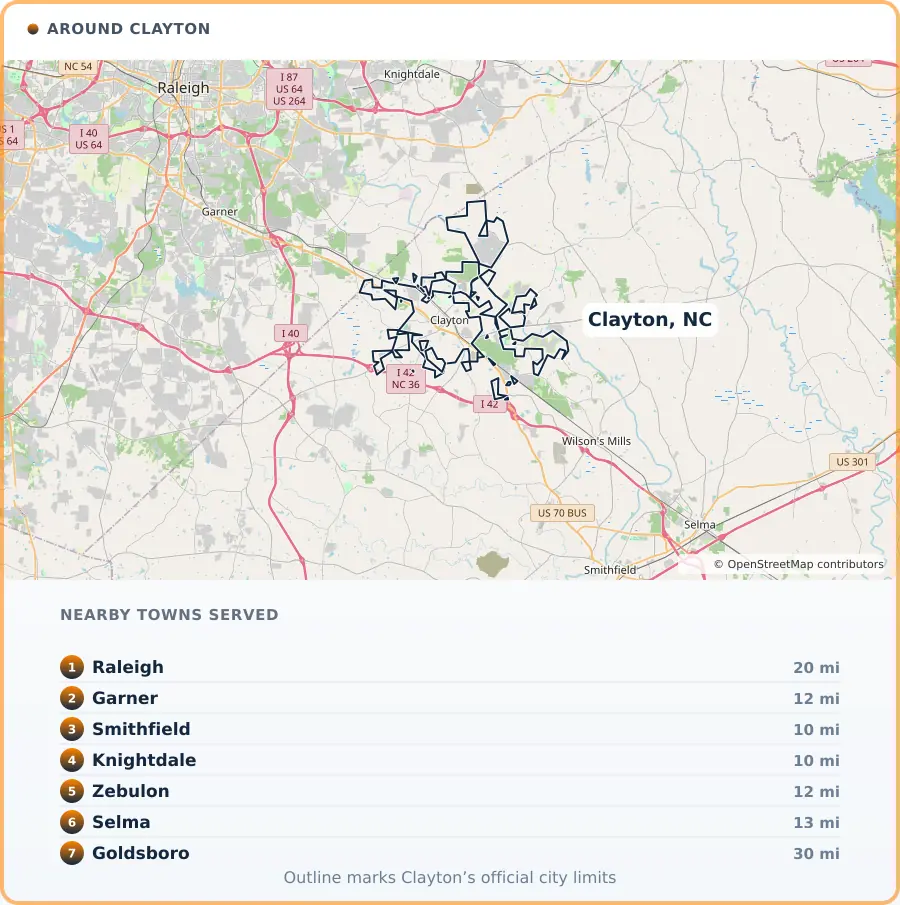
Coverage centres on Clayton, NC and reaches 7 surrounding communities. Response time is what matters most in the hours after a problem is found, so knowing the ground is part of the job.
Clayton, NC Information
Just outside Raleigh, Clayton, NC has grown from a quiet crossroads town into one of the fastest-changing communities in the Triangle, with roughly 28,000 residents calling it home. That growth shows in neighborhoods like Flowers Plantation and Downtown Clayton, where new rooftops and small businesses keep springing up alongside longtime fixtures.
The local economy runs on a sturdy mix of industries: pharmaceutical and biomanufacturing giants like Novo Nordisk and Grifols, heavy equipment maker Caterpillar, and steady employment from UNC Health Johnston, Johnston County Public Schools, and area retailers. Add in agriculture roots that still shape the surrounding countryside, and you get a town that feels both rooted in its rural past and firmly plugged into the region's modern momentum.

Photo: Chris Light, CC BY-SA 4.0